Wednesday, December 11, 2013

SEAT participation at Food & Agricultural Ethics Conference (APSAFE 2013)

The 1st International Conference of the Asia Pacific Society for Food and Agricultural Ethics (APSAFE) was conducted during 28-30 November 2013 at Chulalongkorn University, Bangkok. Two SEAT project partners, namely WP8 Coordinator University of Bergen, Norway and Partner 9 Kasetsart University (Faculty of Fisheries) were involved in organizing this conference. They worked together with the main organizing institutes at Chulalongkorn University, namely the Center for Ethics of Science and Technology (CEST) of the Faculty of Arts, and the Office of the Commission on Agricultural Resource and Education (OCARE). 


Prof Matthias Kaiser from U of Bergen was one of the key note speakers, presenting a paper on "Food Ethics Between Food Safety and Food Security - Challenges and Methods". In his presentation, he mentioned the ethical framework followed by SEAT Project which studied the ethical aspects of aquaculture trade. He also chaired the session on Food Security and Policy. 

Dr Scott Bremer, also from U of Bergen, presented a paper on "Exploring the Social and Ethical Issues of Genetically Modified Animals in India", which he co-wrote with M. Kaiser, N. Wright, K. Millar and G.J. Pakki Reddy. 

Kasetsart University SEAT Project PI Dr Kriengkrai Satapornvanit was one of the organizers, serving under the scientific program committee.

Both Prof Kaiser and Dr Satapornvanit are founding members of the Asia Pacific Society for Food and Agricultural Ethics (APSAFE). Their working partnership was a result of working together under the SEAT Project wherein ethical issues in aquaculture production and trade were studied.


More info on APSAFE

Thursday, July 25, 2013

SEAT meets Thai DoF on EAFI progress and policy issues

L to R: Dr. Reg Eayrs (CEFAS), Dr. Wendy Higman (CEFAS), Dr. Jason Weeks (CEFAS), Dr. Wimol Jantrarotai (Director General, DoF), Dr. Kriengkrai Satapornvanit (KU), Dr. Suttinee Limthammahisorn (DoF).


Dr. Jason Weeks, from the Centre for Environment, Fisheries and Aquaculture Science, UK (CEFAS), and Dr. Kriengkrai Satapornvanit, Faculty of Fisheries, Kasetsart University (FoF-KU), met with Dr. Wimol Jantrarotai, Director General of the Royal Thai Department of Fisheries (DoF) on 25 July 2013 in Bangkok. CEFAS is a SEAT partner coordinating the policy work package and the EAFI process, while FoF-KU is the SEAT Project implementing partner in Thailand.

The main objectives of the meeting were to present the progress on the Ethical Aquaculture Food Index (EAFI) work as well as to give a briefing on policies pertinent to Thailand which came out of SEAT project research. 

The meeting was also attended by Dr. Reg Eayrs and Dr. Wendy Higman (both from CEFAS), Ms. Chamapan Rangaratna (Trade and Investment Manager, British Embassy, Bangkok), and DoF officials, namely, Dr. Suttinee Limthammahisorn (Sr. Fisheries Biologist), Mr. Pairat Kosutarak (Director, Inland Feed Research Institute), Ms. Varatip Somboonyarithi (Director, Fishery Technological Development Division), Ms. Ubolratana Suntornratana (Director, Aquaculture Development and Certification Centre) and Mr. Kriengkrai Jirapitigul (Fishery Biologist, Fish Trade Inspection Office).

The EAFI progress presentation is part of the consultative/ participatory process for the formulation of this index, whereby opinions from various stakeholders are taken into consideration. According to Dr. Weeks, a range of aquaculture standards setters/ certifiers have been consulted and were positive about the EAFI potential and the (risk) framework approach. For buyers, their main comment was to keep it as simple as possible. In addition, all those who have been consulted have liked the inclusion of ethics and the whole value chain approach into the EAFI process. The EAFI is an independent iterative process that is evidence-based and focused on ethics and sustainability, and should be easy to use by any one concerned. It is not an accreditation scheme but a first consideration in making a decision about buying a product.

SEAT is now in the process of encouraging feedback on how the EAFI can be adopted. The development of the EAFI is moving toward worked case studies, weighting, and refined presentation of a robust database from the SEAT field research.

Regarding policy headlines relevant to Thailand, the following were presented:
  • Thailand’s positive governance of aquaculture industry
  • Good communication and overall drive towards relevant certification could be expanded within aquaculture more rapidly
  • Improvements in disease surveillance, epidemiological determinations and control could be enhanced
  • Food safety policy headers and recommendations
  • Reduction of fish meal in feeds requires change in industry mind set and farmer perceptions, and could result in an overall positive impact vis-à-vis criticism of Thai aquaculture, pressure on wild stocks and expansion of seafood farming in Thailand
  • Aquaculture product welfare is an increasing component of third party certification standards, in Europe legislated by EFSA (UK, Farm Animal Welfare Committee). Perception of good welfare is important to maintaining Thai leadership in aquaculture exports.

DoF showed interest in the EAFI process as well as on the questions and model used to analyse the data. There was a concern expressed by Dr. Jantrarotai regarding the EAFI becoming a benchmark for seafoods imported into the EU in the future. It was emphasized by Dr. Weeks that the EAFI is a tool for buyers rather than for exporters, to help them (buyers) make a decision to know if a product is good and safe. 

Dr. Jantrarotai commented that Thailand will do more and try to follow the policy recommendations. There are many good and positive things that Thailand has done and is doing regarding improving the aquaculture industry and these need to be communicated outside Thailand, especially to buyers and consumers of Thai seafood products. He appreciated the fact that the fish welfare issue has been included, and acknowledged that more attention will be given to this issue in the future.

Friday, March 15, 2013

SEAT global website's new look!

SEAT Project global website is sporting a new look! Click on the pic below to view it.

Thursday, February 28, 2013

SEAT-KU @ Surat Shrimp Fair


The 23rd Surat Shrimp Fair was held during 23-24 February 2013 in Wangtai Hotel, Surat Thani, South of Thailand. During the session on Sustainability in Shrimp Farming, Dr Kriengkrai Satapornvanit, SEAT-KU Principal Investigator, presented the SEAT project objectives and activities conducted in Thailand, particularly those relevant to the shrimp industry and Surat Thani in particular. SEAT project also presented posters on project activities, and on the initial results of the on-going work being done together with the Surat Thani Shrimp Club on the potential of shrimp sludge as a nutrient source for other crops.


Surat Thani is one of the provinces where the SEAT project conducted its various surveys on the shrimp value chains, mainly among shrimp producers and a number of other stakeholders as key informants. The other provinces included in the surveys included a few of the large farms in the other southern provinces (Nakhon Sri Thammarat, Satun and Songkhla), as well as those in the eastern region (Chanthaburi and Chachoengsao). A transitional survey is being planned during the next few months among the same respondents in these areas to determine and evaluate changes in farm management and sustainability perceptions.

The shrimp fair in Surat Thani featured presentations by various individuals (from both the government and private sectors), who provided information on current issues and shared experiences on shrimp farming, especially those related to disease (mainly EMS), government policies and regulations, farm management techniques, sustainability and social responsibility.

Input and service providers for the shrimp industry also held an exhibition of their products to promote them, and to interact with existing and potential customers. SEAT-KU also followed up on potential research collaborators among the SMEs for the on-going action research activities.

Dr Key, Dr Putth (DOF), Dr F Murray (Stirling), Ms Siriwan (DoF & Stirling Alumna)
Talking about PCR-AMP & Electronic Nose
Talking about PCR Kit for WSSV etc, Water quality test kits

PhD students from SEAT-University of Stirling (UK) assisted by SEAT-KU Thai staff and local student assistants also interviewed participants to pilot test transitional survey instruments and conduct a mini-survey on institutional aspects.


Before the shrimp fair closed, the participants agreed to a consensus document which outlines strategies on how they can work together to combat EMS and other diseases plaguing the shrimp industry in Thailand.


Crops produced in shrimp farms using shrimp sludge


Friday, January 18, 2013

Shrimp and Tilapia Value Chain Actors in Thailand: their Perceptions on Sustainability

This poster was presented during the PhD Research Conference at the Institute of Aquaculture, University of Stirling, UK, 24 October 2012

Saturday, August 11, 2012

Videos on value chain actors' perceptions on fish production and quality

The following videos were produced for the off-flavour in tilapia awareness workshops being conducted among small groups of tilapia producers, majority of whom have been part of the SEAT project surveys. This is part of the action research on off-flavour tilapia (WP9).

The first video is based on several interviews with various actors in the value chain. As it is a brief video, only the highlights of the issues related to tilapia quality and production are presented. Watch the video here.

The second video was filmed in Scotland, and edited here in Thailand to suit the purposes of the field workshop. It is about the perceptions of a restaurant owner and his observations of what his customers prefer in terms of fish consumption. Watch the video here.

All are in Thai audio and subtitles. The English version is being prepared as well.


Thursday, July 5, 2012

Action research on off-flavour of tilapia

Flavour quality of tilapia was identified during the SEAT scoping surveys as one of the constraints in increasing tilapia exports and sustaining it. As European consumers have mentioned in interviews, flavour of fish is important to them, among other reasons. The way they eat fish is different from Asians, where they will just add some salt, with not much sauce or curry, so the flesh has to be of good quality and flavour. There is no room even for a small hint of off-flavour. Thus for action research, SEAT is looking at some ways of producing on-flavour tilapia to meet demand for exports. At the moment, only about 10% of tilapia produced in Thailand is exported, as there is a high domestic demand. Local tastes for tilapia have developed over the years, with supermarkets and wet markets offering a range of tilapia products, both live and frozen. Processors and exporters are aware of the lack of good quality tilapia to fill their orders, as sometimes they encounter off-flavour in the raw material. There might be a lack of awareness among producers of the importance of producing on-flavour fish for taste-discerning consumers. Thus a focus group discussion/workshop has been planned among selected groups of tilapia farmers from both freshwater and brackishwater areas, to understand their perspectives and aspirations in their tilapia operations, to determine their level of awareness about off-flavours, and to give them a voice in terms of their involvement in achieving production of on-flavour tilapia.

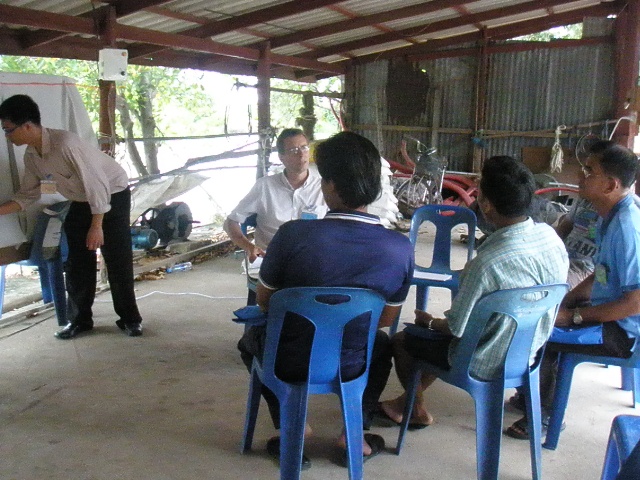
The first workshop was conducted end of June in Nakhon Pathom. This was attended by both men and women, and they actively participated in sharing their opinions on various topics such as: what makes a good quality tilapia, which quality equates to better price, what the consumer (esp European) wants, market situation, and tilapia production systems in other countries. 


Further workshops and field trial activities will engage not only producers but also other actors in the value chain, such as input providers, processors and brokers.


Friday, June 22, 2012

Meeting with DoF on EAFI

A meeting between SEAT Project and the Thai Department of Fisheries (DoF) was held on 15 June 2012 in Bangkok to introduce the Ethical Aquatic Food Index (EAFI) Framework and to obtain comments from DoF, the main policy maker in aquaculture in Thailand.  

The SEAT Project was represented by Dr Jason Weeks from the Centre for Environment, Fisheries and Aquaculture Sciences (CEFAS), UK and the Coordinator for Work Package on Policy Development (WP11). He is the designated lead in EAFI development, working with various project partners. He was accompanied by Dr Francis Murray, from the Institute of Aquaculture, University of Stirling and the co-Project Coordinator of SEAT, and Dr Kriengkrai Satapornvanit, from the Faculty of Fisheries, Kasetsart University and Principal Investigator of SEAT-KU, Thailand.

The SEAT team met with the DoF team led by Dr Waraporn Prompoj, the Senior Expert on International Fisheries Affairs. Dr Chuanpid Chantarawarathit, Chief of the International Cooperation Group, arranged the meeting on the DoF side, which was also attended by the heads of related divisions within the DoF i.e. for shrimp and tilapia.

The meeting was considered a success as it was able to achieve the objectives of informing policy makers on the EAFI as well as it enabled the policy makers to participate in EAFI development by providing their comments, opinions and suggestions. The cooperation of the Thai DoF is much appreciated.


EAFI summary by Dr Jason Weeks, CEFAS (Thai version below)
A key deliverable of the SEAT project is the realisation of an Ethical Aquaculture Food Index (EAFI). This index will be weighted based on the consideration of ethical (for e.g. the use of child labour, the adoption of labour laws etc.) and sustainable (impact of farming on local and wider environment) issues. The EAFI uses a simple hierarchical tiered assessment framework as a process to aid decision making and ultimately derive an index value. The EAFI decision tool adopts a series of linked tiers; each tier containing a set of questions. 

The tiers are based around a broad contextual understanding of the value chain landscape for each product, country and size (scale) of enterprise. This forms the baseline or ‘tier 0’ of the framework. Subsequent tiers ask questions of this landscape in order to derive the index score. Tier 1 and 2 (and ultimately 3) ask increasingly more quantitative questions.

The ability to answer the questions dictates the exit point for the framework. Each level of which is subsequently more involved than the previous layer of questioning. By using a tiered decision tool the user need only advance beyond the base level if uncertainty in the data exists or there is an overall lack of confidence. It is anticipated that most users of the tool will exit early from the framework with sufficient confidence in the outcome of the index value.  When an EAFI is not reached there is a clear understanding as to why and the necessary remedial actions necessary in order to achieve a higher score in future iterations. The EAFI is still in development but early dialogue with potential end users and other stakeholders has been positive.


สรุปดัชนีจรรยาบรรณอาหารจากการเพาะเลี้ยงสัตว์น้ำ
ผลงานสำคัญผลงานหนึ่งของโครงการซีท (โครงการความยั่งยืนของการค้าผลิตภัณฑ์สัตว์น้ำที่มีจรรยาบรรณ) คือ ดัชนีจรรยาบรรณอาหารจากการเพาะเลี้ยงสัตว์น้ำ  (Ethical Aquaculture Food Index :EAFI)  ดัชนีนี้จะเป็นการให้น้ำหนักคะแนนที่นำเรื่องเกี่ยวกับจิตสำนึก/จรรยาบรรณ (ยกตัวอย่างเช่น การใช้แรงงานเด็ก, การใช้กฎหมายแรงงาน เป็นต้น) และ สิ่งที่เกี่ยวกับความยั่งยืน (ผลกระทบของฟาร์มกับสิ่งแวดล้อมที่อยู่รอบฟาร์ม และสิ่งแวดล้อมที่ระดับกว้างขึ้น) นำมาใช้ในการพิจารณา  ดัชนีจรรยาบรรณอาหารจากการเพาะเลี้ยงสัตว์น้ำ จะใช้วิธีการกำหนดกรอบงานซ้ำแบบลำดับชั้น  (simple hierarchical tiered assessment) ใช้เป็นกรอบงานในการช่วยการตัดสินใจ และทำให้เกิดตัวเลขของค่าดัชนี  เครื่องมือการตัดสินใจของดัชนีจรรยาบรรณอาหารจากการเพาะเลี้ยงสัตว์น้ำนี้จะเป็นชุดของลำดับขั้นที่ต่อเนื่องกัน แต่ละชั้นจะประกอบด้วยชุดของคำถาม

ลำดับชั้นขึ้นอยู่กับความเข้าใจส่วนประกอบของห่วงโซ่มูลค่าของแต่ละผลิตภัณฑ์ ในแต่ละประเทศ และในแต่ละขนาดของผู้ผลิต รายละเอียดเหล่านี้จะใช้เป็นลำดับชั้นเริ่มต้น ลำดับชั้น 0 (tier 0) ของกรอบงาน มีการถามคำถามในลำดับชั้นนี้ เพื่อที่จะได้ค่าตัวเลขของดัชนีจรรยาบรรณอาหารจากการเพาะเลี้ยงสัตว์น้ำ    ลำดับชั้น 1 และ 2 (ในที่สุดชั้น 3) จะมีการเพิ่มปริมาณคำถามมากขึ้นในแต่ละชั้น

ความสามารถในการตอบคำถามจะเป็นตัวบ่งบอกถึงจุดสิ้นสุดสำหรับกรอบงาน คำถามในแต่ละชั้นจะมีส่วนที่เกี่ยวข้องมากขึ้นกว่าชั้นที่ผ่านมา โดยการใช้เครื่องมือการตัดสินใจแบบลำดับชั้น ผู้ใช้จำเป็นต้องใช้เพียงให้เกินกว่าระดับเริ่มต้น ถ้าความไม่แน่นอนในข้อมูลเกิดขึ้นหรือมีการขาดความเชื่อมั่นในภาพรวมทั้งหมด ซึ่งสามารถคาดได้ว่าผู้ใช้ส่วนใหญ่จะออกจากกรอบงานก่อนด้วยความเชื่อมั่นที่เพียงพอในผลของค่าดัชนีฯ เมื่อค่าดัชนีฯไม่ถึงระดับ เป็นสิ่งที่เข้าใจดีว่าทำไมถึงไม่ถึงระดับนั้น และมีความจำเป็นที่จะต้องทำอย่างไรที่จะทำให้ได้ค่าดัชนีที่สูงขึ้นในการทำซ้ำในอนาคต ดัชนีจรรรยาบรรณอาหารจากการเพาะเลี้ยงสัตว์น้ำ ยังอยู่ในช่วงการพัฒนา แต่การได้ประชุมพูดคุยปรึกษาระดับต้น กับผู้ใช้ และผู้ที่เกี่ยวข้องอื่น ๆ ได้รับการตอบสนองที่เห็นด้วยกับวิธีการที่นำเสนอ


Thursday, June 14, 2012

WWW @ SEAT-KU

This is the "WP8 Workshop Week" at SEAT-KU a.k.a. WWW @ SEAT-KU. The time when we agreed that all other work is set aside (a bit) to give priority to the final preparations and delivery of the 1-day ethical workshop event on Thu, 14th June. It will be held at the Faculty of Fisheries Building, Kasetsart University, Bangkhen campus. The University of Bergen WP8 team (Prof Dr Matthias Kaiser and Dr Scient Arne Sveinson Haugen) have been in constant communication with the SEAT-KU team, initially with the PI Dr Kriengkrai Satapornvanit and later on, with Ms Wanwichanee Sritha, the Senior Research Associate. The other members of the team also supported the work in various ways.

Although preparations have been going on as early as January, there are still other activities which could only be done this week. Such as the training of workshop facilitators and assistants, which include detailed briefing of the actual workshop activities, explanation of workshop sessions, and role-playing.  During this workshop week, temporary staff have been hired to complete the team of group facilitators and assistants. As the nature of the workshop is participatory group work, group facilitators need to be trained to understand the workshop context and conduct group activities and dynamics effectively.

Participants from various shrimp and tilapia value chains including secondary stakeholders and the media have been invited. Other members of the SEAT team from the University of Stirling, CEFAS, and the University of Copenhagen are also attending this workshop to learn how the outcomes could be linked to the overall SEAT project outcomes such as the Ethical Aquatic Food Index (EAFI).

The shrimp and value chain posters will be distributed to the participants, and an immediate impact survey will also be conducted among them, as part of the action research on poster impact (WP9).

Dr Arne SH and Prof Matthias K from University of Bergen briefing the team
Dr. Kriengkrai S. explaining about the different scenarios


Tuesday, June 5, 2012

Posters in Public Places (PPP)

Asking permission from shop owner to post our posters.
As part of the action research on impact of posters across the aquaculture value chains, we are displaying posters in public places (PPP). The objective is to know whether posters are effective in communicating information across a wide range of readership, in this case, the value chain actors. In the first instance, we plan to post them in shops where we conducted our interviews on chemical use, in Chachoengsao, Chanthaburi and Nakhon Pathom. Other places include wholesale fish and shrimp markets, fish/shrimp farmers' association/ cooperative offices, subdistrict administrative offices and public health clinics. Last 2 June, a number of posters were displayed in Chanthaburi. This week we are going to Chachoengsao and Nakhon Pathom. Both immediate and post-impact (after 30 days) surveys will be conducted. The poster team (WP9) joins the sample collection team (WP4) to travel to these places to share the vehicle.

On a side wall of a shop; area where people sit around for meals/drink.
I
In front of a shop
Gave a poster to a shrimp feed company sales staff.
At the Public Health clinic (sub-district level)
Waiting area at the local Public Health clinic
At a sub-district (tambon) administration office (TAO)

All photos by Beach


Monday, May 28, 2012

Workshop on Ethical Issues in Aquaculture: preparation


Preparations are underway for the Workshop on Ethical Issues in Aquaculture, which is part of the SEAT Project Deliverable on Boundary Issues: A user guide on exploring ethical principles for aquatic farmed products. 

The workshop will be on 14 June 2012 at the Faculty of Fisheries, Kasetsart University, Bangkhen Campus. The local SEAT team is organising the workshop in collaboration with the WP coordinator, Centre for the Study of the Sciences and the Humanities, University of Bergen, Norway. Representatives from the various value chain actors in shrimp and tilapia aquaculture industry have been invited to participate. The ethical tool workshop is a participatory mechanism used by Work Package 8 for engaging Asian stakeholders in the aquaculture industry, to frame their conception of the key values within an ethical industry. The SEAT video on European Perspectives on Imported Seafood (in Thai) will be shown as part of the information dissemination and awareness initiatives of the project. 

The Thai workshop is the last in a series of ethical workshops conducted by the University of Bergen with the local SEAT partners. Earlier workshops were conducted in Bangladesh, China and Vietnam.


VALUE CHAIN POSTERS AVAILABLE FOR DOWNLOADING:


.Go to Downloads section on the right panel to download posters or click HERE.


Tuesday, May 15, 2012

Current status of work as of 15 May 2012

Below is the status of some of the activities of SEAT project in Thailand:

1. LCA/LCC implementation (WP3) - still contacting potential tilapia and shrimp value chain actors to participate in the Life Cycle Assessment and Life Cycle Costing (LCA/LCC) of their operations. Main priority are the feed mills, processing plants and hatcheries. Secondary are the fish meal plants and reduction fisheries. A PhD student is also looking at by-products of processing plants, their current and potential re-use. LCA/LCC of growout farms have been completed and data entry is on-going (data translation prior to entry). Contacting potential respondents from the industry is a challenge. Those interested in this matter may contact us at seatku at gmail dot com.
Patrik H (PhD student, Leiden U) trained the local team and discussed about WP3 implementation 
2. Environmental modeling (WP4) - the first batch of samples (water, sediment, feed) had been sent for analysis, both in-country (water) and to the University of Stirling (sediment, feed). These are samples from selected shrimp and tilapia farmers contacted during the integrated survey.

Verifying farm map with farm manager
3. Livelihoods survey (WP5) - already completed, and data entry in excel is complete, access database is still being finalised.

4. Perceptions on therapeutants selling and use (WP6) - data analysis of survey is ongoing, posters will be prepared for WAS conference in Sept. The probiotics study is on-going, while the FZT in tilapia study is nearing completion.

5. Environmental contamination (WP7) - microcosm studies already completed by Wageningen research partners in collaboration with SEAT-KU team; experiments on algal toxicity and kung foi genotoxicity on-going. Posters on results are being prepared for WAS conference.

Microcosm trials to assess the effect of antibiotics on ecosystem
6. Ethical aquaculture workshop (WP8) - facilitated by the University of Bergen partners in collaboration with SEAT-KU team; representatives from various shrimp and tilapia value chain nodes have been invited and confirmations are being received, workshop materials are being prepared, including translations of presentation materials. Facilitators' training will be on 11-13 June, the workshop proper on 14 June, and post-workshop meeting on 15 June.

7. Action research (WP9) - out of a large number action research topics identified from scoping and integrated surveys, a couple have been identified as doable, namely: off-flavour in tilapia (building awareness among stakeholders esp producers, and on-farm trials on methods to reduce it), impact assessment of posters for information and knowledge across the value chains. Other initiatives related to engaging SMEs (in Thailand and Europe) to involve in action research, are on-going. Some if them are across the 4 country sites of the project, as well as across the different WPs.

Adding trash fish to shrimp feed to improve feed nutritional quality


Monday, April 30, 2012

Thai shrimp in the news

A number of news articles about shrimp farming activities and concerns in Thailand always appear in both the local and foreign news. Recently news items found in English language publications in Thailand are listed below (with links to original publications):

Shrimp farmers demand government action on falling shrimp prices
More price supports ahead to tackle market surpluses
Heat cools shrimp price

Likewise Shrimp News International also publishes summaries of reports and news articles related to shrimp farming activities in Thailand and elsewhere.

photo by: ans


Thursday, March 29, 2012

Tilapia Value Chain Posters distributed

The SEAT-KU team joined the Manit Farm sponsored farmers' meeting "Super Black, Super Red" last Saturday, 24 March 2012, held at the KU Kampaengsen campus in Nakhon Pathom province. We had the opportunity to distribute the tilapia value chain posters to more than 100 participants, mainly farmers, out of around 1,200 attendees. The immediate impact interviews will be conducted during this week by phone, while the post-impact assessment will be conducted towards the end of May.

SEAT-KU team would like to express their thanks to Mr Amorn L and team for accommodating our request to distribute the posters.

Photo by: ArleneNS
Photo by: DougWaley
Photo by: ArleneNS

Photo by: DougWaley

Thursday, March 15, 2012

WP3 & 5 IDS, WP4 Sampling, WP7 tests & WP9 Posters

The In-Depth Surveys for WPs3 & 5 are on-going, with those in Chachoengsao, Nakhon Pathom and Surat Thani already completed. Remaining IDS will be for Chanthaburi (WP3 only, WP5 already completed), Suphanburi (WP3&5), and other South (WP3&5).

With the completion of WP6&7 IDS, the next activities for WP7 are the toxicity tests and microcosm, which have already started with both indoor (lab) and outdoor facilities on campus.

The first batch of sampling for WP4 on Environmental Modeling was carried out from 3 to 9 March 2012, with shrimp farms in Chanthaburi and Chachoengsao, and tilapia farms in Chachoengsao and Nakhon Pathom. The samples taken were water from inlet, outlet, storage and culture ponds, sediment from culture pond, and feed used. As SOP for recording purposes, some water quality parameters were also measured at site, namely DO, temperature, pH and salinity at each collection point. GPS coordinates were also noted, along with time of collection. As to weather condition, there was just one observation: it was very hot and sunny!

Water samples have been sent to a lab for analysis, whereas the soil samples will be processed and dried and sent to UoS for analysis, together with the feed samples.

The value chain posters were also given out to the farms as well as to key informants for distribution. Telephone surveys will be conducted to assess poster impact as part of WP9 action research. The immediate impact survey could not be conducted in the field as it was not convenient to do so given the work to be done for WP4 sample collection.


All photos by Jigsz